| SteveMandich.com | Blog | Bio | Evel Incarnate | Back to Other Stuff | Contact |
|
|
|
|
Super Ichiro Crazy!
A Guide to All Things Ichiro
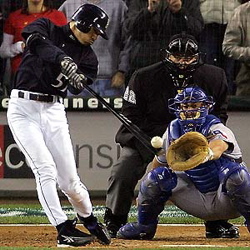
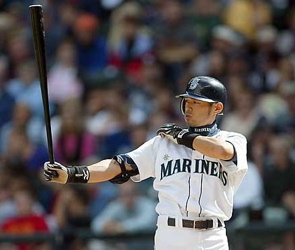
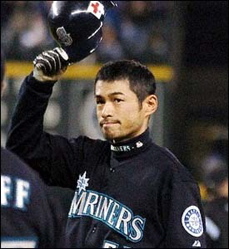
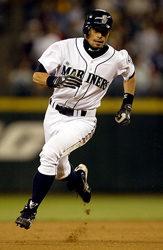
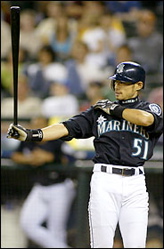
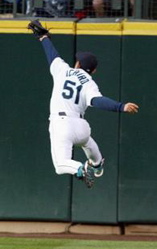
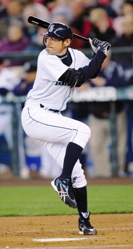
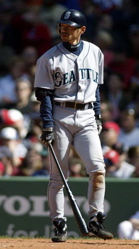
Ichiro Suzuki is my all-time favorite baseball player. This, along with my Super Ichiro Crazy blog, is my tribute. Between 2001 and 2012, Ichiro played eleven-and-a-half seasons for my favorite team, the Seattle Mariners, before being traded to the New York Yankees. During each of the first ten of those Seattle seasons, he had at least 200 hits (tying Pete Roses's record of ten career 200-hit seasons), played in ten consecutive All-Star Games (starting in nine), batted at least .300, and won ten consecutive Gold Glove awards... He's also led the American League with hits seven times and won two American League batting crowns (.350 in 2001, .372 in 2004), and he's compiled at least 100 runs and 30 stolen bases in eight seasons. Most significantly, in 2004 he had 262 hits, breaking George Sisler's 84-year-old record for most hits in a season with 257. All of this coming after seven full seasons in Japan, in which he won seven consecutive Pacific League batting titles and seven consecutive Gold Glove awards, establishing himself as one of Japan's greatest players of all time. |
|
Vital Statistics Height: 5'9" Weight: 170 Bats: Left Throws: Right Number: 51 Position: Right field Born: October 22, 1973; Kasugai, Japan Home: Kasugai, Japan Nicknames: Elvis, Wizard, Ich, Ichi, Itchy Balls |
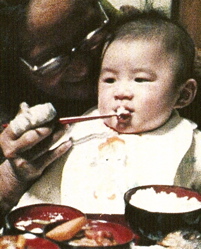
With grandmother Hisa. |
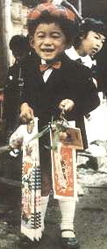
Early fashion. |
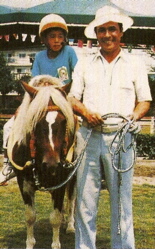
With dad, horse. |
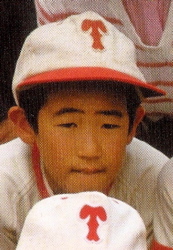
Ready for action. |
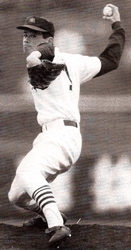
Pitching in high school. |
|
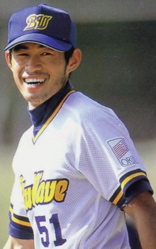
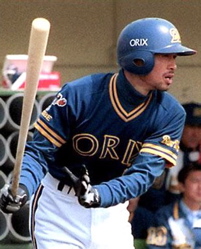
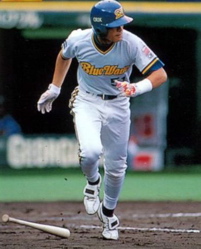
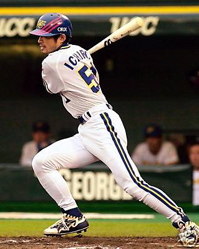
1973-1991: Youth Ichiro Suzuki was born on October 22, 1973 in Kasugai, Nishikasugai District, Aichi Prefecture, Japan. He grew up in Toyoyama Cho, just north of Nagoya, near the Nagoya airport. He began playing baseball at age seven for his elementary school team, and soon asked his father, Nobuyuki Suzuki, to help him to one day become a professional. The two began intensive hitting, throwing, and fielding drills every day, playing in a field adjacent to the airport's main entrance. As a teenager, Ichiro was chosen to play in the prestigious baseball program at Nagoya's Aiko-Dai Meiden High School. ("After I went to high school, all I did was baseball and sleeping.") Though he was primarily used as a pitcher (with a 93 mph fastball), his career high school batting average was .505. Following his final season at Meiden, Ichiro was drafted by the Orix Blue Wave of Japan's Pacific League in November 1991. The six-team Pacific League and the six-team Central League together form Nippon Professional Baseball, Japan's top organization. (The NPB's twelve teams each represent a sponsor, not their home city. Orix is a Japanese financial services group; the defunct Blue Wave played in Kobe.) Despite Ichiro's impressive numbers, he wasn't drafted until the fourth round, as many teams thought the five-nine, 124-pound 18-year-old was too small compete professionally. Though Ichiro left Nagoya to play in Kobe, his father continues to maintain a Nagoya museum dedicated to his son, the Ichiro Exhibition Room. |
|
|
|
|
|
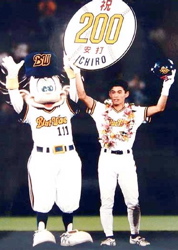
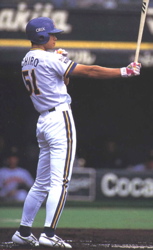
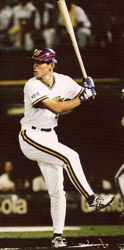
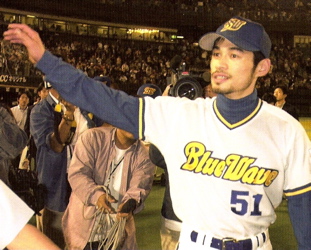
1992: Orix Blue Wave After his high school graduation in March 1992, Ichiro spent most of his first professional season playing for the Blue Wave's minor-league team. Skeptical Blue Wave manager Shozo Doi mostly kept Ichiro down because he didn't approve of his unorthodox, pendulum-like leg motion, swinging his leading right leg back and then forward upon every swing of the bat. Still, Ichiro hit .366 in 58 minor-league games, and in 40 games in the majors, the 18-year-old hit .253.
1993: Orix Blue Wave
1994: Orix Blue Wave
1995: Orix Blue Wave |
|
|
|
|
|
1996: Orix Blue Wave Ichiro led the Pacific League for the third straight season with a .356 average, won his third straight MVP award, and he led the Blue Wave to the Japan Series title, beating the Central League champion Yomiuri Giants. Following the season, and after playing in an exhibition series against visiting American Major League all-stars, Ichiro decided that he too wanted to one day play in America.
1997: Orix Blue Wave
1998: Orix Blue Wave
1999: Orix Blue Wave
2000: Orix Blue Wave
After the season, Orix felt they could soon no longer afford to keep their superstar, and allowed him to negotiate with Major League teams. Through the posting system, the Seattle Mariners won the right to negotiate with him, and on November 18, 2000, the M's signed him to a three-year, $14 million contract, making Ichiro the first-ever Japanese position player to sign with a Major League club.
|
|
|
|
|
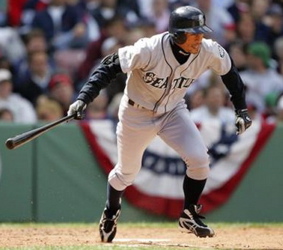
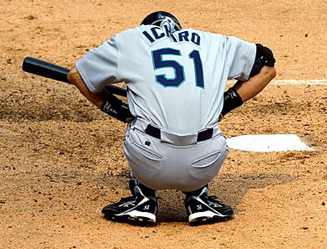
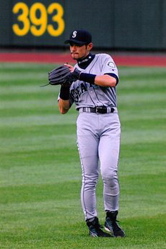
2001: Seattle Mariners Ichiro's American debut with the 2001 Seattle Mariners was not only one of the greatest seasons any player has ever recorded, but it was also one of the most-watched, as the Japanese media sensation quickly gained superstardom in the U.S. The leadoff hitter's .350 batting average led the majors, as did his 242 hits (a rookie record, and the most by any player in 71 years), as well as his 56 stolen bases. He also dazzled with his defensive prowess in right field; in his first week in Seattle, his putout of Oakland's Terrence Long at third base gained legendary status as "The Throw." Ichiromania was in full swing by the All-Star break, as he was the first rookie ever to lead all players in All-Star balloting, with 3,373,035 votes. (Coincidentally, the game was held in Seattle.) Ichiro was a major contributor to Seattle's 116-win season, tying 1906 Chicago Cubs for the regular-season win record, though the M's fell short of the World Series, losing to the Yankees in the American League Championship Series. Ultimately, Ichiro stifled those critics who claimed he would be too small and frail to make it in the American majors. Instead, he won both the American League's Most Valuable Player and Rookie of the Year awards, the only player besides Fred Lynn to do so.
2002: Seattle Mariners
2003: Seattle Mariners
2004: Seattle Mariners
2005: Seattle Mariners |
|
|
|
|
|
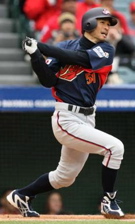
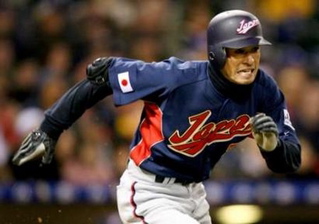
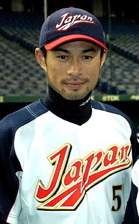
2006: Team Japan Ichiro led Japan to a gold medal in the inaugural World Baseball Classic, an international baseball tournament played over 17 days in March 2006. Japan had a 5-3 record in eight tournament games, including a 10-6 win over Cuba in the final contest in San Diego. Ichiro hit in every game, going 12-for-33 for a .364 average, with seven runs, four stolen bases, and one home run.
2006: Seattle Mariners
2007: Seattle Mariners
2008: Seattle Mariners |
|
|
|
|
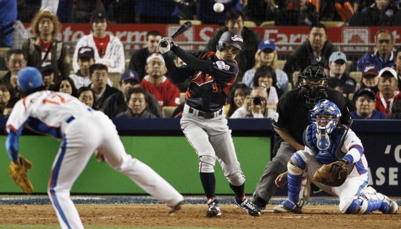
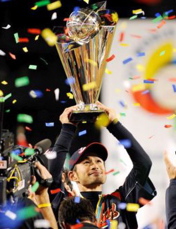
2009: Team Japan In March, Ichiro and Team Japan won their second gold medal in the second-ever World Baseball Classic. Over nine games, Ichiro batted .280 (12-for-44), with seven runs and five runs batted in, including a tenth-inning, two-out, two-run single, leading Japan to a 5-3 victory over Korea in the championship game at Dodger Stadium.
2009: Seattle Mariners |
|
|
|
|
|
|
2011: Seattle Mariners Set the Mariner career hits record, formerly held by Edgar Martinez with 2,247. Batted .272 with 184 hits. First professional season since 1993, when he was 19, in which he didn't bat .300.
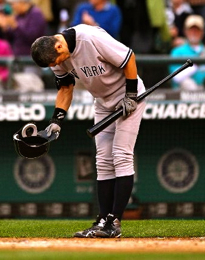
2012: Seattle Mariners / New York Yankees
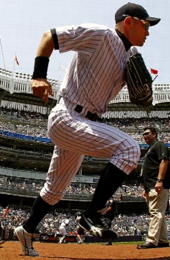
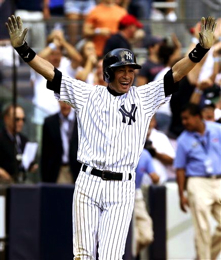
2013: New York Yankees |
|
|
|
|
|
The Future Ichiro will enter the 2014 season at age 40, with 2,742 hits in his MLB career. Assuming he remains healthy, he will need to average 129 hits over the next two seasons to reach 3,000. However, his contract with the Yankees expires after the 2014 season... Ichiro's ten Major League seasons through 2010 have met the minimum required for Hall of Fame eligibility. Five years after his retirement, he will need to be approved for the Hall by a screening committee made up of members of the Baseball Writers Association of America. Ichiro's numbers alone should make him a shoo-in as the first Asian HoFer, but his role as the MLB's first Asian position player, opening the door for more such players, and thereby giving the American game a more international appeal, should guarantee his induction. |
| Uniforms | ||||||
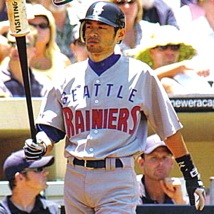
1938 Seattle Rainiers road uniform. |
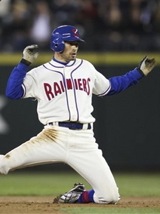
1939 Rainiers home uniform. |
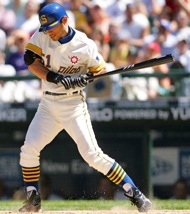
1969 Seattle Pilots home uniform. |
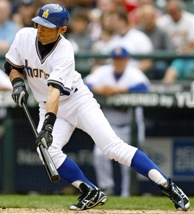
1977 Seattle Pilots home uniform. |
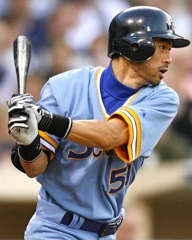
1978 Mariners road uniform. |
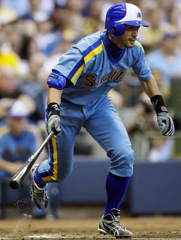
1980s Mariners road uniform. |
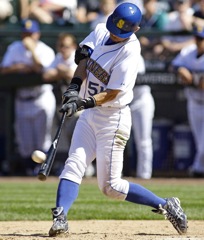
1989 Mariners home uniform. |
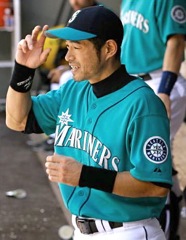
1990s M's alternate uniform. |
|
Above are some uniforms Ichiro has worn for various Mariner turn-back-the-clock games; most of the other uniform combos he's worn throughout his professional career appear elsewhere on this page.
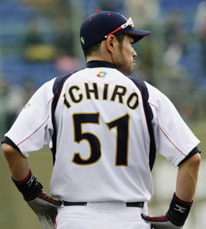
So why only his first name on his uniform? During the 1994 season, when Ichiro was one of four Orix players named Suzuki, Blue Wave manager Akira Ogi had him replace the last name on his jersey to his first name, a publicity stunt to promote the rising star. Ichiro was initially embarrassed by it, but the name caught on in Japan, and later, in the U.S. While "Ichiro" means "first son," he actually has an older brother, fashion designer Kazuyasu Suzuki. As for his uniform number, Ichiro wore 51 for Orix, and he was also issued the number when he joined the Mariners. At first he was reluctant to wear 51, since it was previously worn by former Mariner pitching sensation Randy Johnson, but he agreed to it anyhow: "I'm very fortunate the Mariners would let me wear 51, and I'll work hard not to damage the reputation of the number." Like many other major leaguers in the 2000s, Ichiro routinely wore long pants. Then, in the 2006 World Baseball Classic, he began wearing short pants to expose his navy socks, a look that he's sported ever since. |
| Equipment | |

|
|
|
|
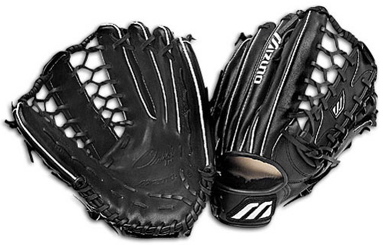
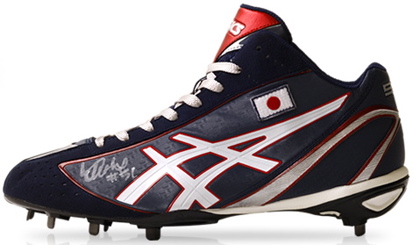
Ichiro wears Mizuno ball gloves (handmade for him by legendary leather craftsman Yoshi Tsubota), Mizuno batting gloves and wrist bands, and he uses Mizuno bats, which he keeps in a humidor. He also wears Asics spikes and Oakley Ichiro Juliet Signature Series sunglasses (more on those here).
"When a person gives a gift to another, it is expected the gift will be treated well. But baseball players throw and kick their baseball gloves that have been given to them by makers of baseball equipment. I feel that is a contradiction... Equipment -- bats, glove, and spikes -- should look cool and get kids who play baseball want to wear them." |
| Memorabilia |
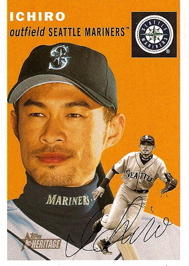
Topps Heritage #3, 2003. |
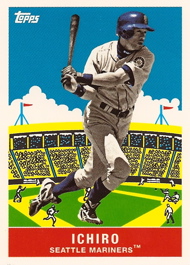
Topps #FF16, 2007. |
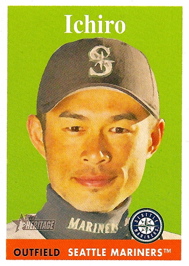
Topps Heritage #30, 2007. |
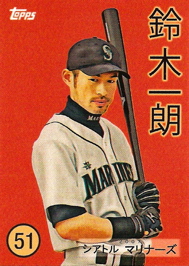
Topps #TCH24, 2008. |
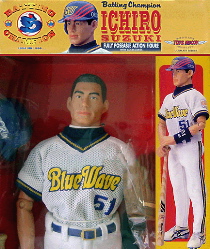
Action figure, 1999. |
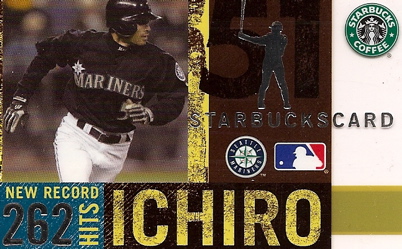
Starbucks card, 2005. |
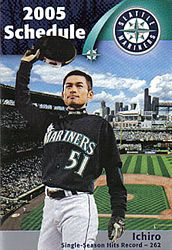
Pocket schedule, 2005. |
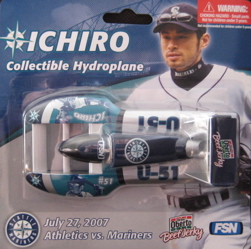
Toy hydroplane. |
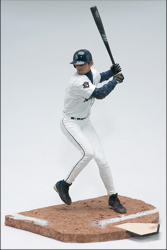
McFarlane Series 1, 2002. |
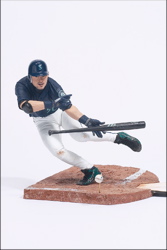
McFarlane Series 4, 2003. |
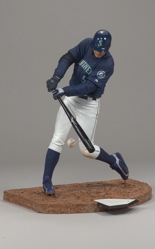
McFarlane Series 22, 2008. |
| Much more memorabilia may be found at CollectingIchiro.com, IchiroCollectables.com, IchiroCollection on flickr and, of course, eBay. |
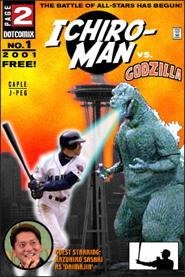
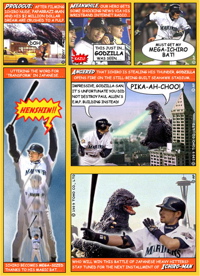
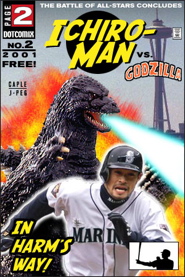
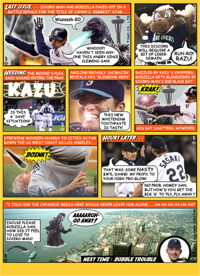
| Comics | ||||||
|
|
|
|
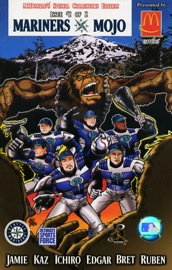
Ichiro meets Bigfoot. |
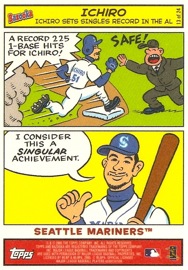
2005 Bazooka #13. |
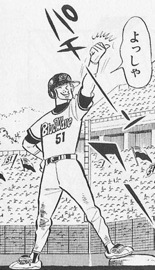
From Dokaben. |
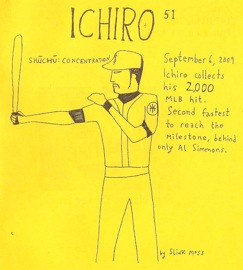
By Slink Moss. |
| To tell the truth, I'm not excited to go to Cleveland. If I ever saw myself saying I'm excited going to Cleveland, I'd punch myself in the face. |
| Magazines | ||||||
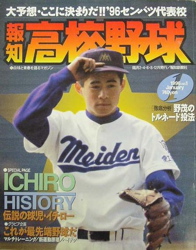
Japanese magazine, 1990s. |
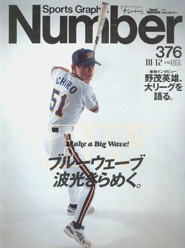
Sports Graphic Number 376. |
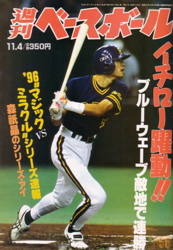
Japanese magazine, 1990s. |
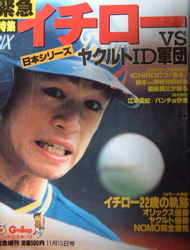
Japanese magazine, 1990s. |
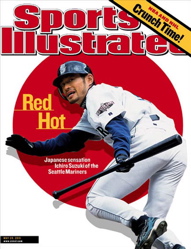
Sports Illustrated, May 28, 2001. |
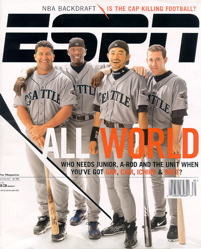
ESPN, July 23, 2001. |
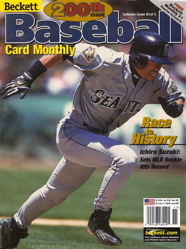
Beckett Baseball, November '01. |
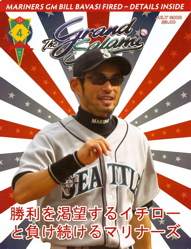
The Grand Salami, July 2008. |
| Although it is a tradition to shake hands in America, people don't wash their hands when they go to the bathroom. |
| Books | ||||||
|
|
|
|
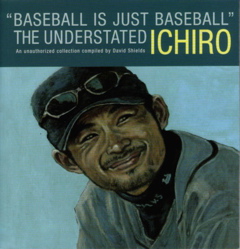
Baseball Is Just Baseball: The Understated Ichiro by David Shields (TNI, 2001). A photo-less collection of Ichiro's quotes gathered from various sources during his rookie season that takes about 20 minutes to read. by David Shields (TNI, 2001). A photo-less collection of Ichiro's quotes gathered from various sources during his rookie season that takes about 20 minutes to read.
Baseball Samurais: Ichiro Suzuki and the Asian Invasion
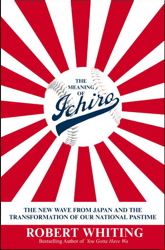
The Meaning of Ichiro: The New Wave from Japan and the Transformation of Our National Pastime
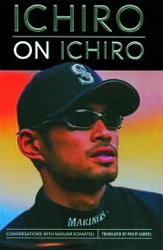
Ichiro on Ichiro: Conversations with Narumi Komatsu
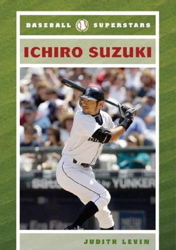
Baseball Superstars: Ichiro Suzuki |
 by Rob Rains (St. Martin's, 2001). A slapped-together, 200-page paperback that also features Hideo Nomo and other Japanese MLBers.
 by Robert Whiting (Warner, 2004). The author of 1989's You Gotta Have Wa, examining the impact of Americans playing pro ball in Japan, follows it up with this look at Japanese ballplayers in America, with a particularly in-depth focus on Ichiro.
 (Sasquatch, 2004). Killer book-length interview touching on many aspects of Ichiro's life and career, with a generous number of black-and-white and color photos, including some from his personal collection.
 by Judith Levin (Chelsea House, 2007). Among the heap of Ichiro books aimed at kids, this is easily the best one. For the record, here are the others...
 by Jean Davies Okimoto (Kumagi Press, 2002)...
 by Jim Allen (Kodansha International, 2001)...
 by Mark Stewart (Milbrook Press, 2002)...
 by Roland Lazenby (Triumph, 2002)...
 by Matt Christopher (Little, Brown and Company, 2003)...
 by Terri Dougherty (ABDO, 2003)...
 by Ken Rappaport (Enslow, 2004)...
 by David S. Leigh (Barnes & Noble, 2004)...
 by Jim Rosenthal (St. Martin's Griffin, 2006)...
 by Jeff Savage (Lerner Publications, 2007).
| Rock 'n' Roll | ||||
|
|
|
|
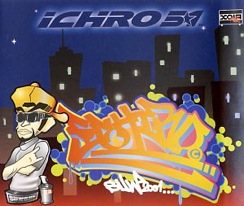
"Ichiro!" by Xola (2001). Xola (more often known as Seattle rapper Kid Sensation) got Ichiro to license his name to this song, which was played at Safeco Field and sold locally as a CD single during Ichiro's rookie season. The disc was then released in Japan in 2002, featuring three additional tracks: a new '02 version, the "Club Groove Remix" and the "Mad Flava Remix" (one or both of remixed by Sir Mix-a-Lot). The track surfaced again on the 2009 Kid Sensation CD Back Home.
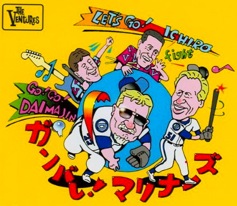
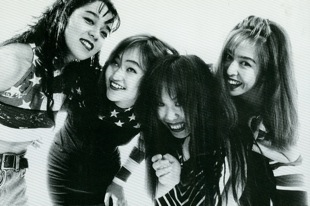
"Let's Go! Ichiro" by the Ventures (2001). After opening with a promising surf-rock riff, this song is mostly just a mix of guitars, horns, and the song title sung ad nauseum over a dumb dance beat. From the EP Songs for the Baseball Players. "Ichiro" by Terry Cashman (2002). Terry "Talkin' Baseball" Cashman's tribute is a generic, mid-tempo rocker, though he rolls the R when he sings "Ichiro" for authenticity. From the EP Talkin' Baseball: Seattle Mariners. "Go Go Ichiro" by Supersnazz (2004). A two-minute garage-rock blast by the all-girl Japanese band, shouting the title over and over like crazed fans who are genuinely stoked about their subject. From the compilation CD Seattle ..A Baseball Town, in which Ichiro gets additional shout-outs in "Baseball Hero" (also by Supersnazz) and "2001" by Presidents of the United States of America frontguy Chris Ballew. "Ichiro" by Phil Coley (2007). Sounds like Waylon Jennings singing over a Wesley Willis composition, with a bit more lyrical ambition than the above numbers. Coley ticks off Ichiro's various career achievements as a sort of folky ballad with some oddball lines ("He has the drive, precision and smoothness of a Toyota"). From the CD Baseball Songs: Sports Heroes 2. "Ichiro Suzuki" by the Seattle Sports Band (2009). An amateurish effort from the album Mariners & Seahawks. "Ichiro on Third" by Projekt A-ko (2009). Scottish lads tackle Ichiro with a sort of Pavement-y sound, with lyrics that are neither here nor there. From the CD Yoyodyne. "Go Ichiro!" by Carlos De Couto (2010). Mixes a '90s Helmet riff with cheering crowd noises, a fake stadium announcer and the song title sung repeatedly. From the one-song album Go Ichiro! "Ichiro Goes to the Moon" by the Baseball Project (2011). Thus far, easily the best of all Ichiro songs. "Don't put him on a pedestal/ Just treat him with respect/ He seeks but his own approval/ And earns all that he gets." The verses speculate that he has two stomachs and is constructing his own spaceship, and the chorus goes, "I won't be surprised at all when Ichiro goes, Ichiro goes to the moon." There's also gong noises. From the album Volume 2: High and Inside. "Ichiro: The Opera" by Dave Ross (year unknown). Sung to the tune of Figaro by a wacky Seattle DJ -- listen."Go, Go, Go, Go Ichiro" by Ben Gibbard (unreleased). The Death Cab for Cutie singer performed this live in 2010. Entrance Music. Over his ten seasons at Safeco Field, these are among the tunes that have played as he's stepped up to bat: "In Da Club" by 50 Cent, "In the Ayer," "Jump," and "Sugar" by Flo Rida, "Identity" and "Yokushitsu" by Ringo Shiina, "Take it to da House" by Trick Daddy, "Yeah!" by Usher, and "S&M" by Rihanna. |
| TV/Video | ||||
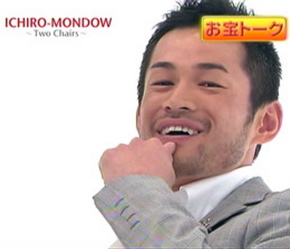
Ichiro-Mondow: Two Chairs. |
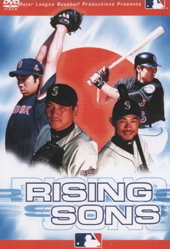
Rising Sons. |
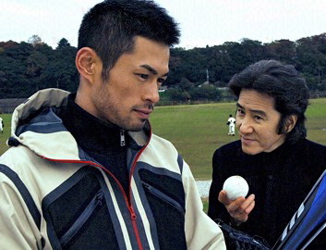
Furuhata Ninzaburo. |
| On the weekly half-hour show Ichiro-Mondow: Two Chairs ("Ichiro Versus"), he interviewed various well-known figures on a largely barren set (save for the titular chairs). During the show, which aired on Saturday nights beginning in 2006, the host also played word-association games with his diverse guests: athletes, actors, models, scientists, lawyers, and Peter, a popular Japanese drag queen... The DVDs Rising Sons (2002) and Rising Sons Return (2003) document Ichiro's first two seasons with the Mariners, along with some fellow Japanese players... He was featured in a nine-minute chapter of Ken Burns's Baseball: The Tenth Inning in 2010... Ichiro played himself on the January 4, 2006 episode of Furuhata Ninzaburo, a Fuju TV police detective drama series, in which he kills a guy who blackmailed his brother... When asked, "Who would you want to play you in a movie about your life?", Ichiro said Brad Pitt. |
| Endorsements | ||||
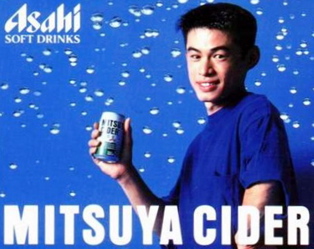
Asahi Soft Drinks. |
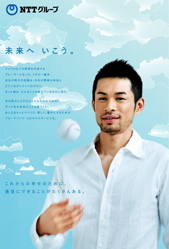
NTT mobile phones. |
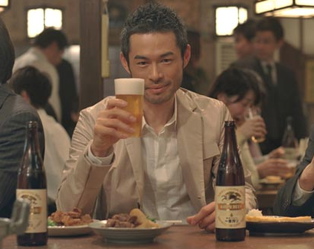
Kirin beer, though he reportedly doesn't drink -- video. |
| Besides the above brands and the aforementioned Mizuno, Asics and Oakley, Ichiro also pitches for Yunker energy drink, Nikko Cordial Securities, Nissan, and Nippon Oil. |
| If you were to meet a beautiful girl and go bowling, if she's an ugly bowler, you are going to be disappointed. |
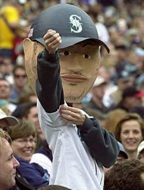
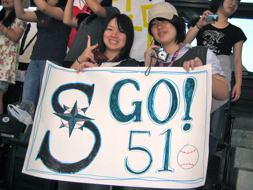
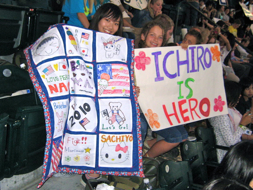
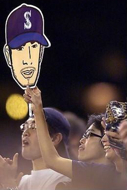
| Fans | ||||
|
|
|
|
|
|
|
| Yumiko & Ikkyu | ||||||
|
|
|
|
|
|
|
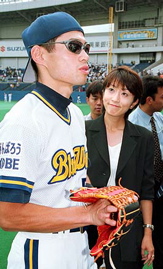
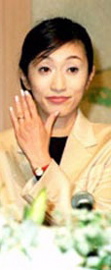
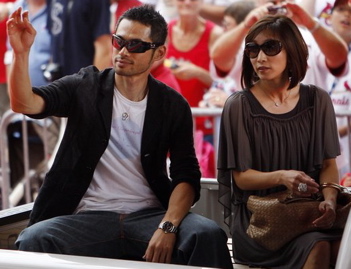
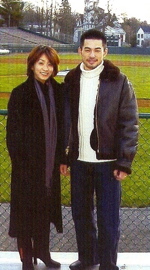
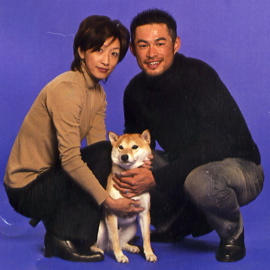
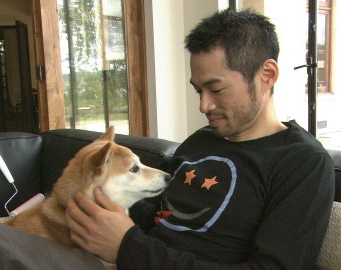
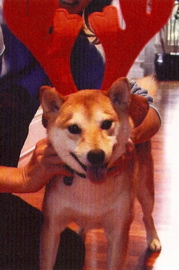
| Ichiro is married to former Japanese TV sports reporter Yumiko Fukushima. They wed on December 3, 1999, in a private ceremony at the Riviera Country Club in Los Angeles, avoiding a certain media crush in Japan. During the season, they live in their Medina home, in an affluent Seattle suburb on Lake Washington. In the off-season, they live in Kobe. Though they have no children, they do have a Shiba Inu named Ikkyu. When Ichiro first arrived in Seattle, he refused to divulge Ikkyu's name to the media: "I would not wish to say without first asking his permission." During a 2007 press conference, while explaining his decision to sign a contract extension with the Mariners and stay in Seattle, he claimed he was persuaded by Ikkyu: "He said, 'Woof, woof, woof,' which meant, 'Stay, stay, stay.' Of course, I listened." Yumiko and Ikkyu supposedly high-five each other whenever they see Ichiro get a hit on TV. |
| Favorites | ||
|
Food: Curry rice, pickled plum, okaka Pre-game food: Rice ball Comfort food: "My wife's cookies." Pizza topping: cheese Snack: Eclair Meal: Dinner Meal to make: Bananas foster Ice cream: Cookies 'n' cream, vanilla with dark chocolate Dessert: Tiramisu Drink: Pepsi Coffee drink: Frappucino with whipped cream Restaurant: El Gaucho, Shiro's, Saito's (closed) Least favorite food: "Anything that smells bad." High school class: History Childhood sports team: Chunichi Dragons Baseball player: Ken Griffey, Jr. Road ballpark: Yankee Stadium Off-season activity: Baseball Sport other than baseball: Car racing, track & field Vacation spot: Milan, Los Angeles Thing about Seattle: "You can see water everywhere you go, which is very unique for an urban area in the States." |
Movie: Love Actually, Miss Congeniality Baseball movie: Mr. 3000 Sports movie: Cool Runnings Comedy movie: The Full Monty Actor: Hugh Grant Actress: Sandra Bullock TV Channel: BET, Animal Planet TV Show: Lost, Prison Break Cartoon: Dragon Ball Z Music: "I very much like hip-hop and rap -- my older brother's influence." Music artist: Snoop Dogg, Nelly, Fergie Song: "Nuthin' but a 'G' Thang" Video game: Dragon Quest, Mario Bros. Color: Aqua blue Clothing: "T-shirts, jeans, and suits designed by Yohji Yamamoto." Hobby: Collecting paintings, shopping for antique furniture, driving his Porsche, coin collecting, playing go, playing golf, growing bonsai trees Charity: Olive Crest, Make-A-Wish Foundation American expression: "August in Kansas City is hotter than two rats in a fucking wool sock" -- video. |
| Fashion | ||||
|
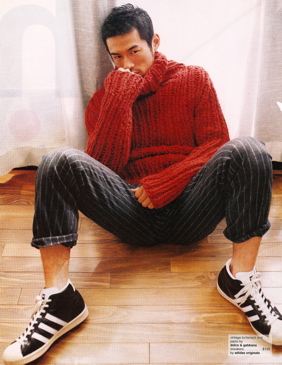
|
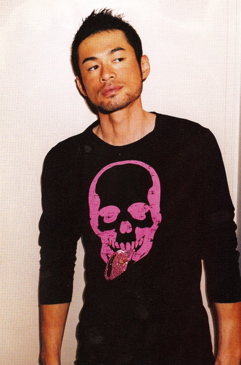
|
|
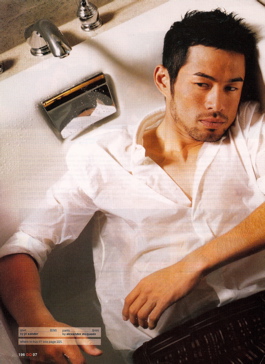
Ichiro fancies himself a sharp dresser, whether in garish hiphop gear, Italian suits, or the threads he wore in the May 2007 GQ (above). He also has his own Ichiro Levi's in Japan.
The fashion sense Americans have is a crime. |
| Miscellany | ||||||
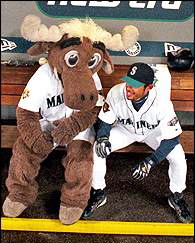
With the Mariner Moose. |
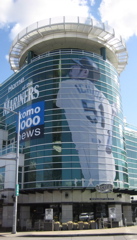
Fisher Plaza. |
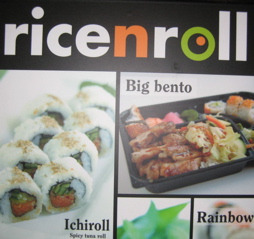
Ichiroll. |
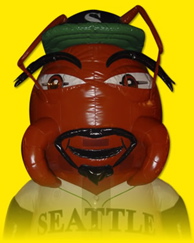
Ichiroach. |
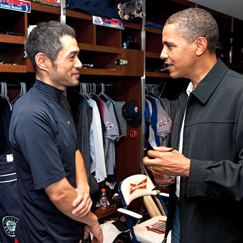
Ichiro-Obama summit. |
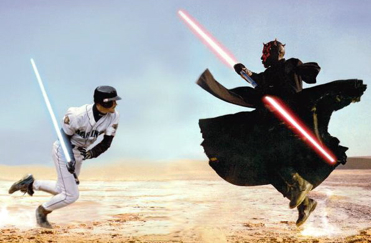
Ichiro fights Darth Maul. |
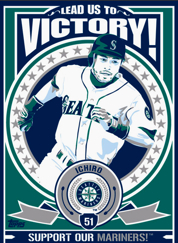
Sports Propaganda poster. |
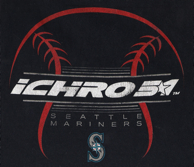
Ichiro-designed T-shirt. |
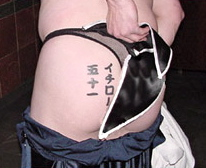
Rob Dibble's Ichiro ass tattoo. |
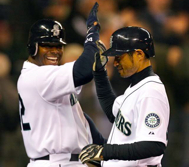
Celebrating with Griffey, 2009. |
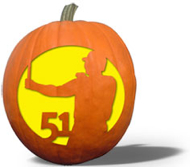
Ichiro jack o' lantern. |
|
Ichiro Official Web Site, and Ichiro Times.
For general, current reference, check out MLB.com, ESPN.com, Baseball-Reference.com, and Wikipedia. Find cool images on Google, Bing, and Flickr. Watch Ichiro on YouTube. |
| Back to Top |
| Last updated on October 5, 2013. |
|
© 2004-2013 Steve Mandich |